Carbon Monoxide: The Invisible Danger Firefighters Respond to Every Winter
You can't see, smell, or taste carbon monoxide. Here's where it comes from, the symptoms to watch for, and exactly where to put CO alarms in your home.
Every winter, fire departments across the country answer thousands of carbon monoxide calls. Many of them start the same way: a family wakes up with headaches, assumes they have the flu, and goes back to bed.
Carbon monoxide (CO) is a colorless, odorless gas produced whenever fuel burns: natural gas, propane, oil, wood, gasoline, or charcoal. You can't see it or smell it, which is why an alarm is the only reliable warning.
Where carbon monoxide comes from
The most common sources firefighters find on CO calls:
- Furnaces and boilers with cracked heat exchangers or blocked flues
- Gas water heaters, stoves, and dryers that aren't venting properly
- Fireplaces and wood stoves with a closed damper or a clogged chimney
- Cars running in an attached garage, even with the garage door open
- Portable generators used indoors, in a garage, or near a window
- Charcoal grills or camp heaters brought inside during a power outage
Know the symptoms
Mild CO poisoning feels a lot like the flu, but without a fever:
- Headache and dizziness
- Nausea or vomiting
- Weakness and fatigue
- Shortness of breath
- Confusion or blurred vision
A big clue: everyone in the home feels sick at the same time, including pets, and people feel better after leaving the house. Sleeping or intoxicated people can die from CO before they ever notice symptoms.
Where to install CO alarms
- On every level of the home, including the basement
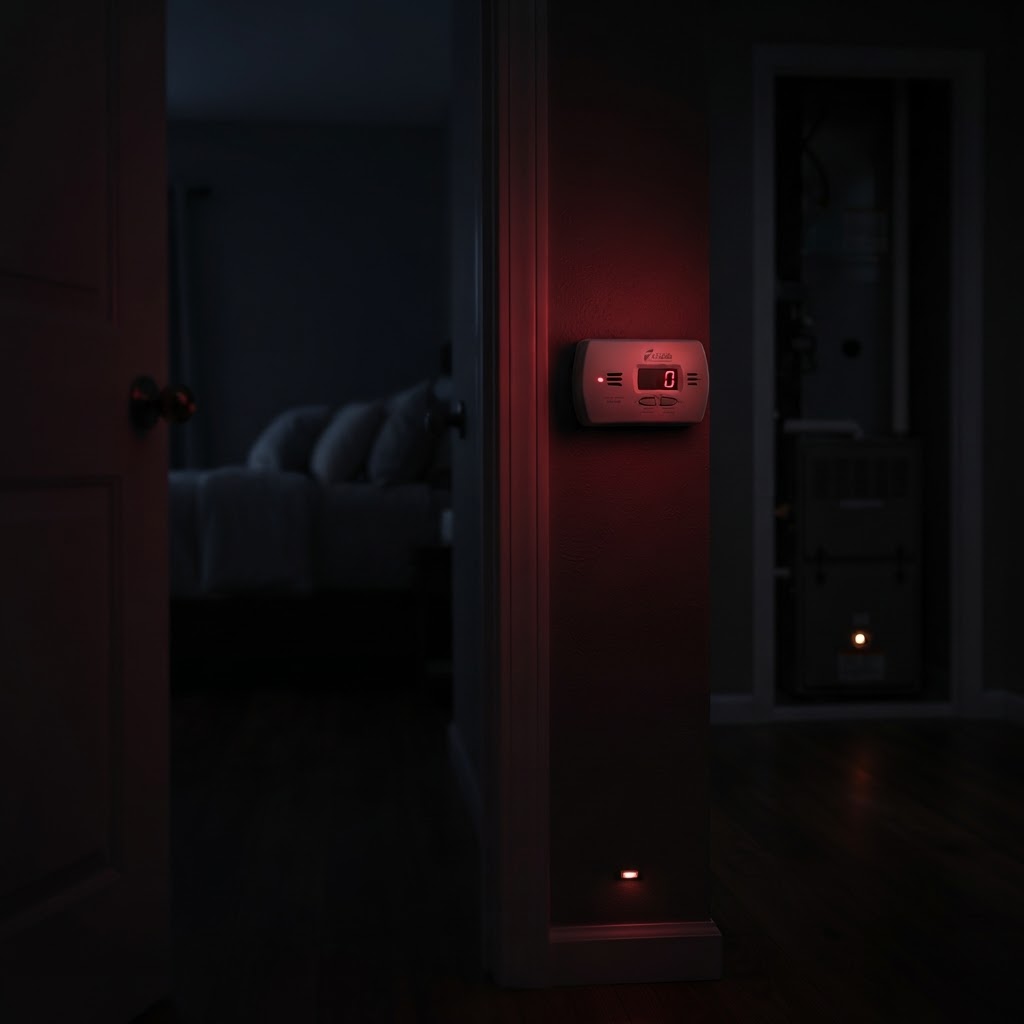
- Outside each sleeping area, in the hallway near bedrooms
- Near attached garages and fuel-burning appliances, but not directly beside them (about 15 feet away avoids nuisance alarms)
- Follow the manufacturer's mounting height; many CO alarms work on a wall or ceiling
Combination smoke/CO alarms are a great option. Interconnected alarms are even better, so when one sounds, they all sound.
Maintain your alarms
- Test monthly with the test button
- Replace batteries at least once a year (or use 10-year sealed units)
- Replace the alarm every 5 to 10 years; check the date on the back
Prevention habits that matter
- Have your furnace, water heater, and chimney inspected every year before heating season.
- Never run a generator indoors or in a garage. Keep it at least 20 feet from the house, with the exhaust pointed away from doors and windows.
- Never warm up a car in the garage, even with the door open.
- Never use a gas oven or stove to heat your home.
- After a snowstorm, clear snow from dryer, furnace, and fireplace vents outside.
If your CO alarm goes off
- Get everyone outside to fresh air immediately, including pets. Don't open windows first.
- Call 911 from outside. A CO alarm is an emergency, even if nobody feels sick.
- Don't go back inside until firefighters have checked the home and told you it's safe.
Firefighters carry meters that measure CO levels room by room. They would much rather respond to a false alarm than a tragedy, so never hesitate to call.
Want to know who responds in your area? Find your local fire department and save their non-emergency number.
Recommended Safety Gear

Prepared Hero Emergency Fire Blanket
Prepared Hero Emergency Fire Blanket, Kitchen & Home, 39 x 39 in, 4 Pack Smothers Grease, Gas And Electric Flame Emergencies With No Sprays, Cleanup Or Residue; Kitchen, Home And Camping Ready

410 Piece Waterproof Hard Shell First Aid Kit
Always be prepared with this all-inclusive first aid kit. Great for any outdoor adventure!

First Alert Smoke Alarm
Safety essentials for your home and car! These fire extinguishers are a must-have!
Affiliate disclosure: we may earn a small commission from qualifying purchases at no extra cost to you. This helps keep the directory free.
Fire safety tips in your inbox
Occasional emails with prevention tips, department news, and directory updates. Unsubscribe any time.